
Am I the strong friend? Take the free quiz.
Everyone calls you when things fall apart. You can't remember the last time you asked for help. Twelve quick statements show how much being the strong one shapes your days, and which small skill to try first.
It also checks the other four patterns, so you'll see if something else is gripping harder. No grades, no wrong answers. Your answers stay on this device.
12 statements left to answer.
Good news: the things you are great at have just been working a little overtime. You are in good company. Lots of people share this pattern.
PerfectGood enoughI shouldI couldSorry, sorryThank youI'm fineI'm tiredAlwaysSometimesI will handle itCan you help?DefinitelyMaybeYes, of courseLet me checkI have toI get to
Want to go a little deeper first? , with signs, why it happens and small skills to try.
The Grip Check is for reflection only. It is not a diagnosis or a clinical assessment, and it was written for this site rather than taken from any clinical questionnaire. If you are struggling, please talk with a qualified professional. If you are experiencing any unsafe thinking, call or text 988, or call 911. 988 is the free Suicide and Crisis Lifeline. It is a separate national service, not part of the Flexi app.
What does the strong friend quiz look at?
Two of the twelve statements are about being the strong one:
- Finding it easier to give help than to ask for it.
- Saying you are fine when you are not.
The other ten check perfectionism, people pleasing, needing control and holding it all in. Being the strong one often travels with one of them, so the full picture helps you pick where to start.
What helps first?
Most strong ones start with one small ask for help, then a few minutes off duty without pulling it together for anyone.
 FM 7.3Ask KindlyAsk for what you need, clearly and without blame.
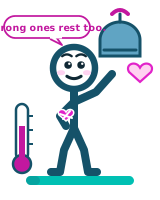 FM 4.15Soft Spot AllowedLet yourself feel tired, sad or scared for a few minutes without pulling it together for anyone.
Want the whole picture? Always the strong one? How to ask for help has the signs, why it happens and more skills to try.
Questions people ask
Is this quiz a test or a diagnosis?
No. It is a quick look at everyday habits, written for this site, for reflection only. It is not a diagnosis or a clinical assessment.
What if my result is a different pattern?
That is common. Most people see themselves in one or two of the five patterns. Your result names the one gripping hardest right now, with a skill to try for it.
Are my answers saved?
No. Your answers stay on this page. Nothing you tap is saved or sent.
How do I stop being the strong one all the time?
Start small. Ask one person for one easy thing this week, and notice what happens when they say yes. The always the strong one guide has the signs, why it happens and more skills to try.