
When you need to know for sure.
Control and certainty seeking is the urge to plan, check and research until the risk feels gone. You loosen it by making small choices before you are sure, then noticing you can handle what happens next.
- Saves nothing you write
- Paid safely through Apple, Google or Shopify
- Written by a licensed clinical social worker
Why do I need to be in control?
Not knowing feels like danger to your nervous system, and planning feels like safety. Planning is useful. The problem starts when no amount of planning ever feels like enough.
What are the signs?
- You research a small purchase for days.
- Last minute changes ruin your whole mood.
- You struggle to let others do it their way.
- You replay what could go wrong before every event.
- Spontaneous plans feel stressful, not fun.
What is the flip side of needing to be sure?
Mistakes feel like proof you are weak or not enough, so you push people away or avoid anything you might fall short at.
You take reasonable chances, learn as you go, and let yourself not know how it will turn out.
How do I get better with uncertainty?
Practice choosing for now. Make a decision with what you know today, act on it, and let tomorrow's facts change it if they need to.
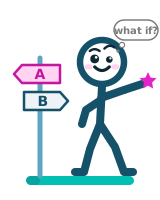 FM 5.2Choose for NowWhen you are stuck between options, pick one for now, let the worry come along and learn as you go.
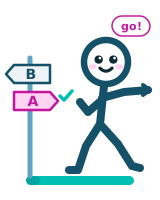 FM 5.13Pick and GoWhen you are stuck on a choice, set a two minute timer, pick the good enough option and take the first step before doubt catches up.
 FM 3.3Soften CertaintyNotice the need to be right and loosen it kindly.
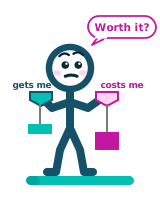 FM 3.4Bend the RuleWeigh what a strict inner rule gives you against what it costs, then try a looser version.
What does the research say?
Difficulty tolerating uncertainty shows up across many kinds of worry and anxiety, which is why researchers call it a common thread.
Source: Carleton, Journal of Anxiety Disorders, 2016Questions people ask
Is needing control a personality trait?
It is a pattern you learned because it worked. Patterns can loosen with practice.
How do I stop overplanning?
Set a time limit for deciding, pick the best option at the end of it, and go.
What is intolerance of uncertainty?
It is finding not knowing so uncomfortable that you work hard to avoid it, even when that costs you time, rest or fun.